

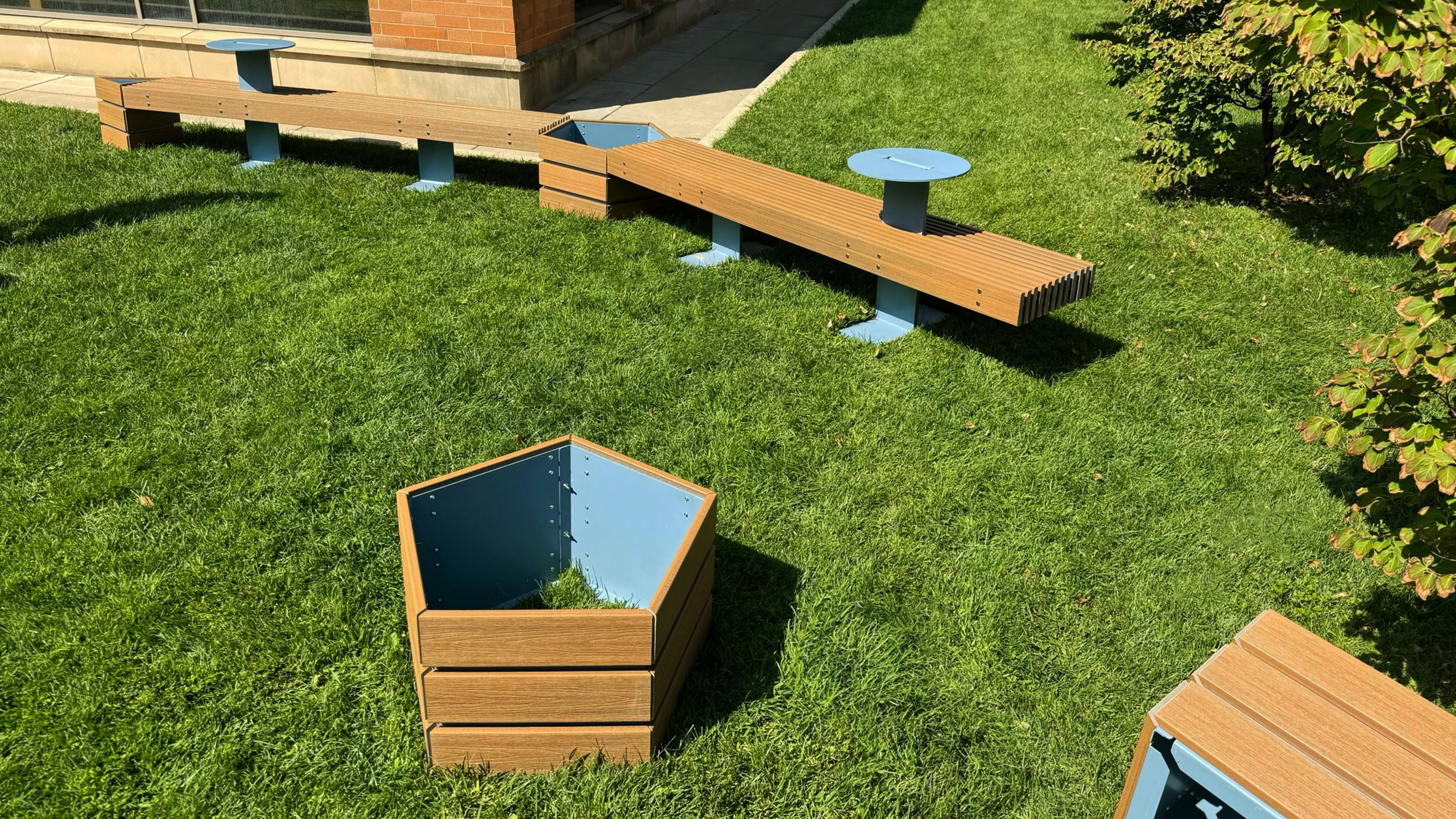
001 —
A collaborative project developing public-grade furnishings for an underutilized campus green space. This project was made possible by the College Hill Community Redevelopment Corporation.
Role
CMF Strategy · Material Selection · Process Book Lead
Faculty
John B. Dixon · Colin Cormier
Student Team
Vinamra Agarwal · Juliana Bongiorno · Leo Brock · Audrey Burnard · Erica Frost · George Hausberger · Grant Kilgard · Lili Kottmyer · Max Longe · Kye Longbrake · Drew Mather · Loren Mitchell · Taegan Phelps · Ethan Phillips · Virginia Sheldon · Rachel Smith · Joey Stange · Malik Tucker · Bella Walker · Adam Wolshire
SITE & CONTEXT
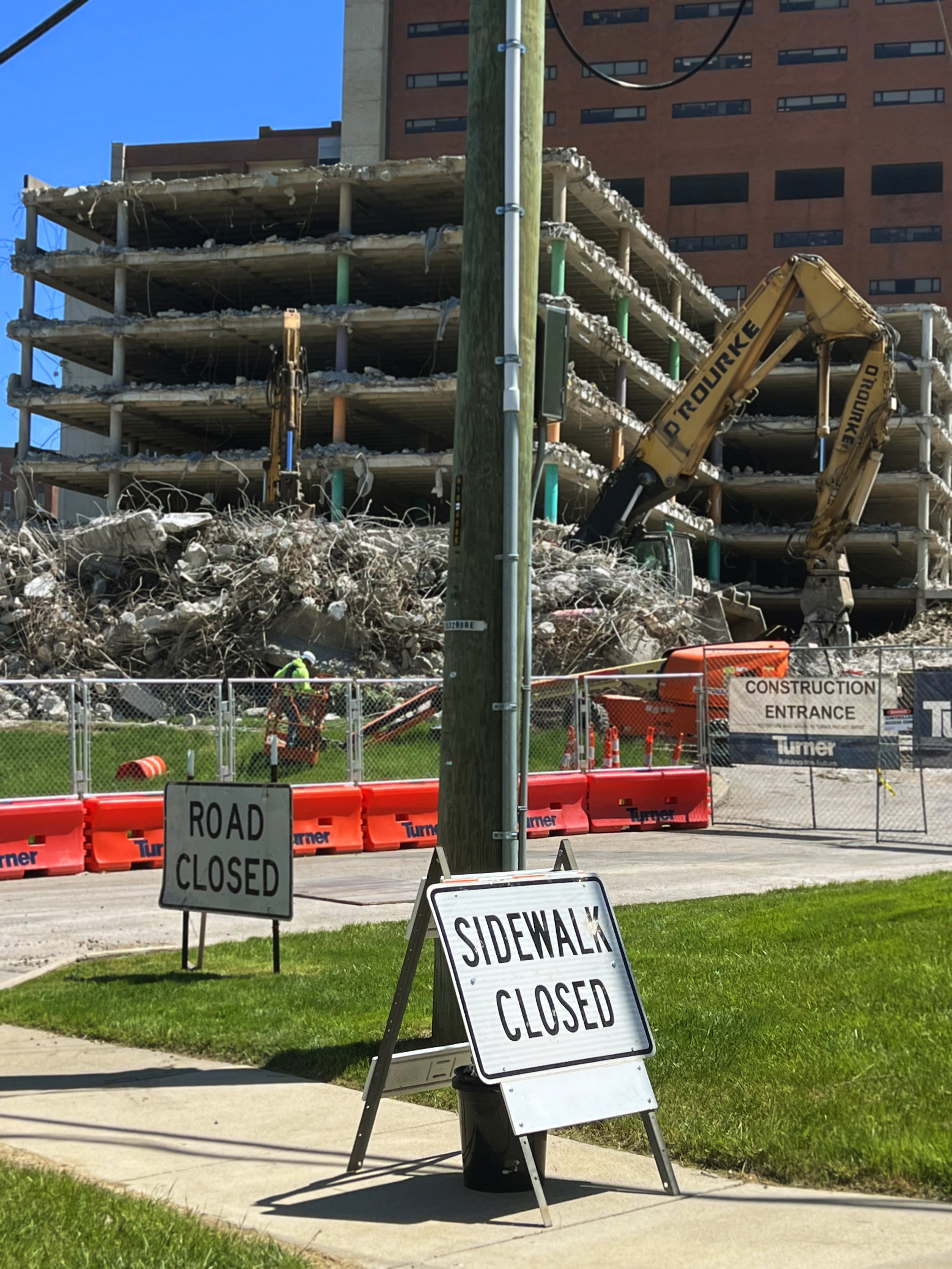
The site sits at the intersection of a dense campus and active urban edge - defined by movement and constant construction.
The project responds by introducing durable, inviting furniture that blends into the environment while encouraging pause and engagement.
MATERIAL
SYSTEM LOGIC
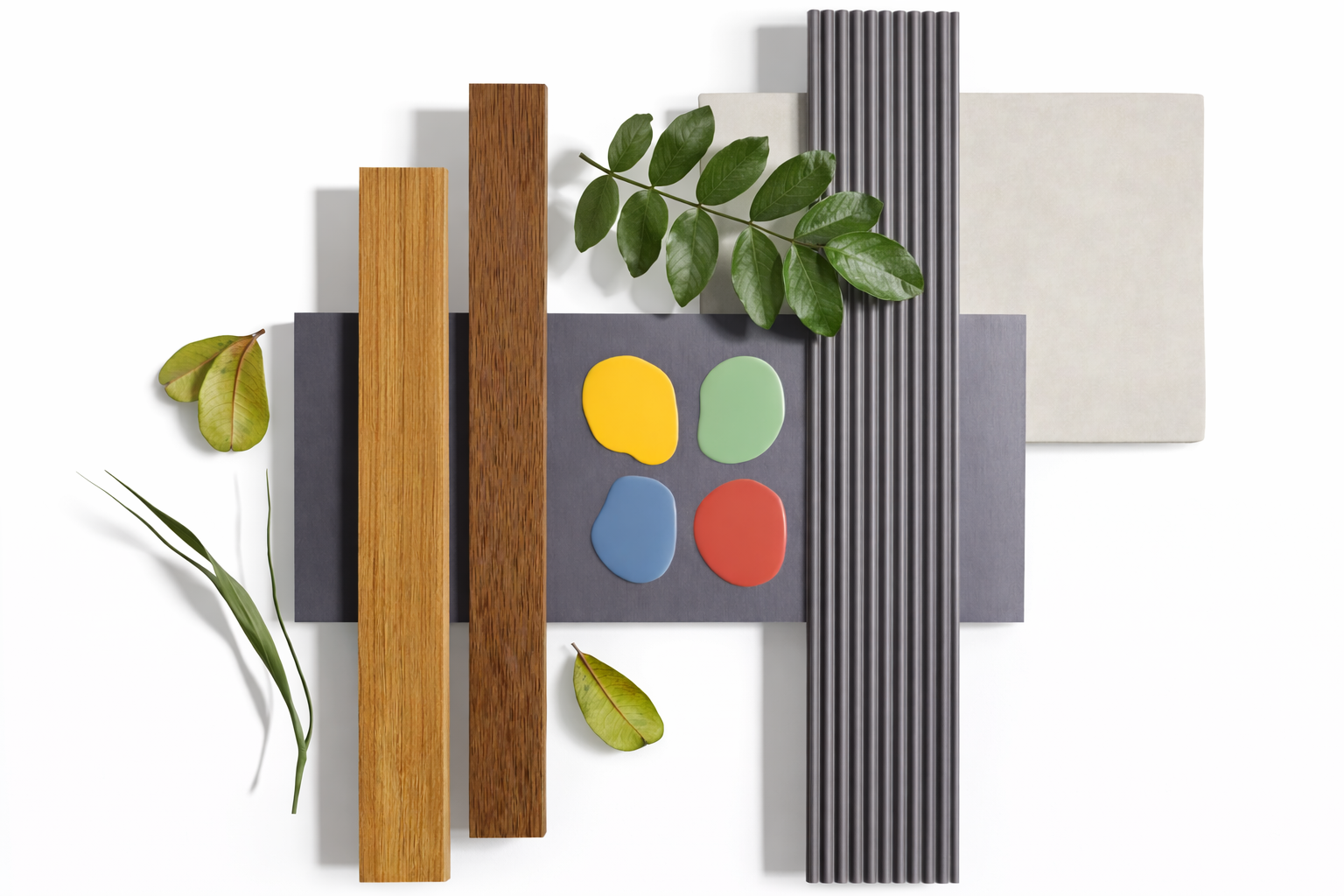
Materials were selected for both performance and meaning.
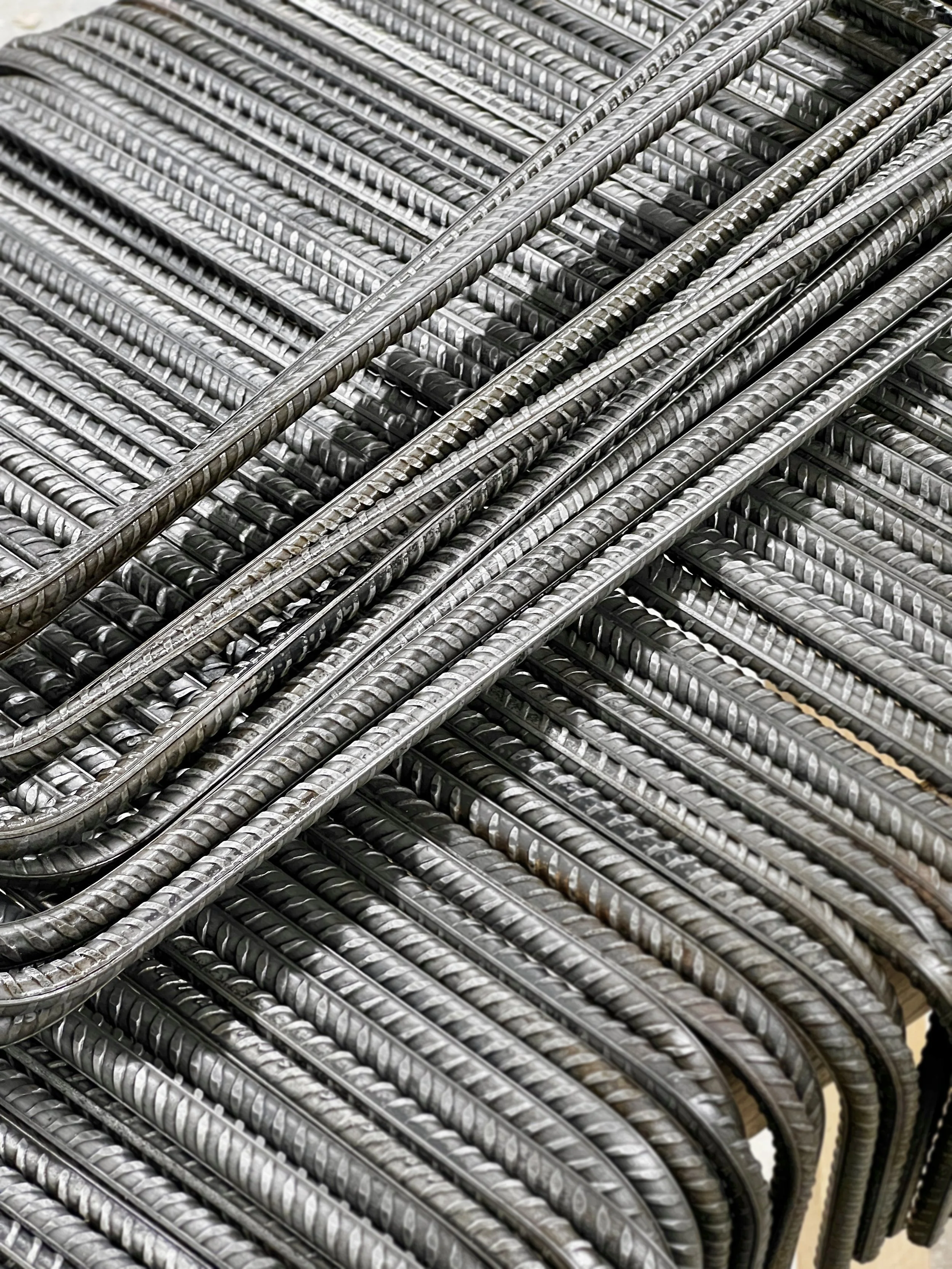
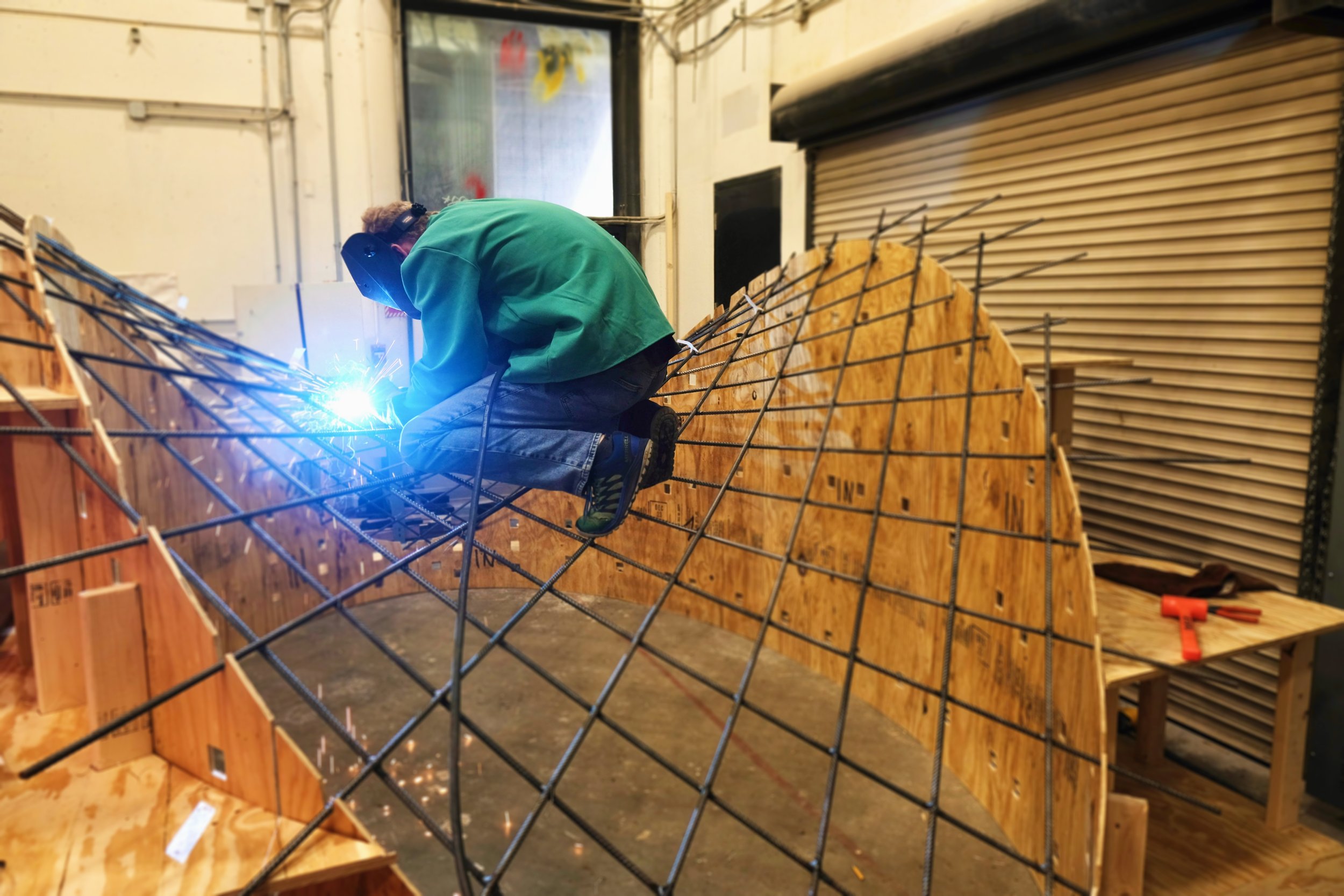
Rebar references the perpetual construction of the campus, transforming an industrial material into a repeatable structural system suited for public use.
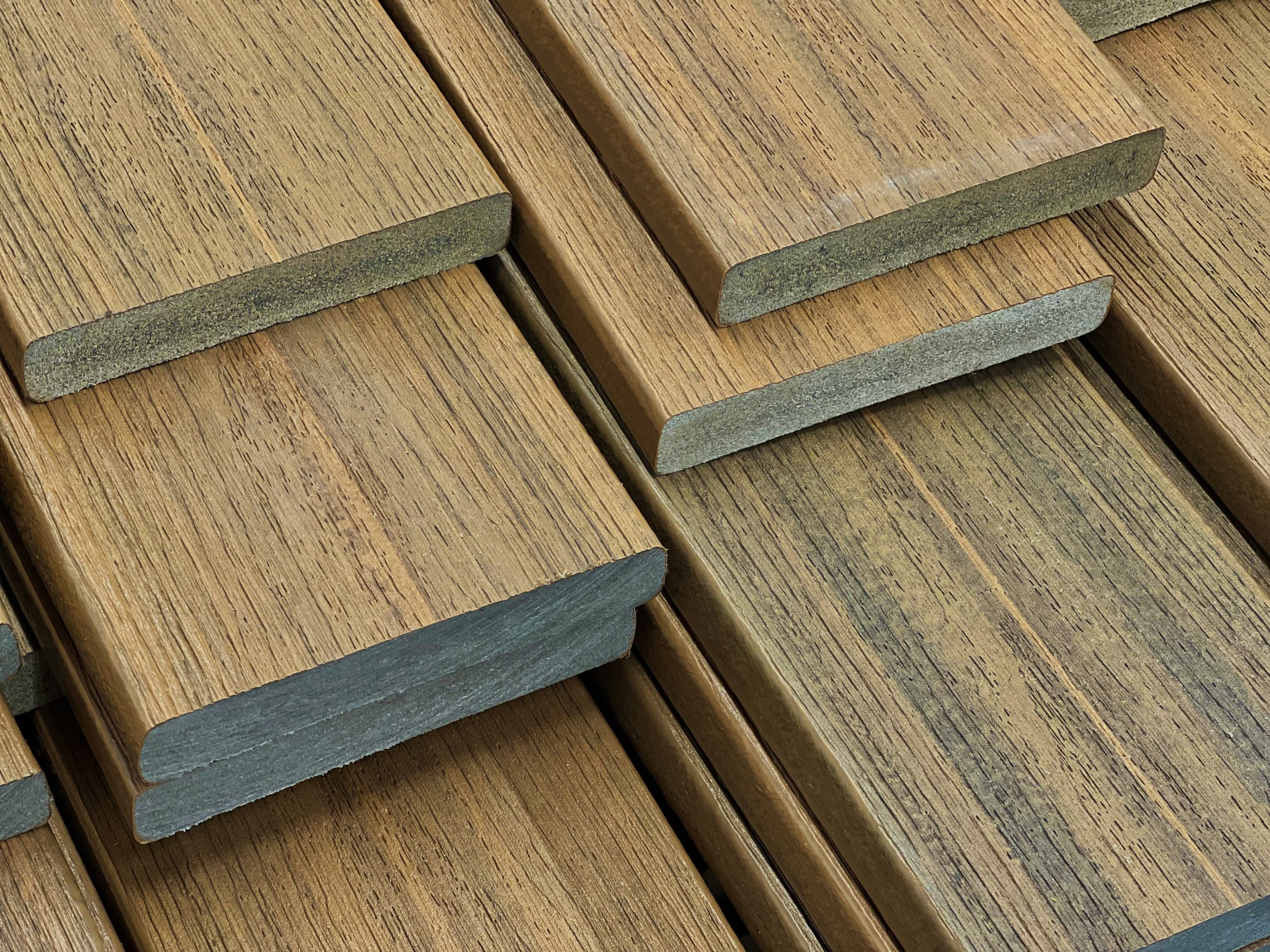
Composite decking and powder-coated steel balance durability, warmth, and long term maintenance.
Color and finish choices were developed to feel playful without overpowering the site, supporting modularity and repetition across multiple furniture typologies.
ITERATION & FABRICATION
Early ideation explored a wide range of spatial and formal possibilities, prioritizing modularity, engagement, and repeatable systems.
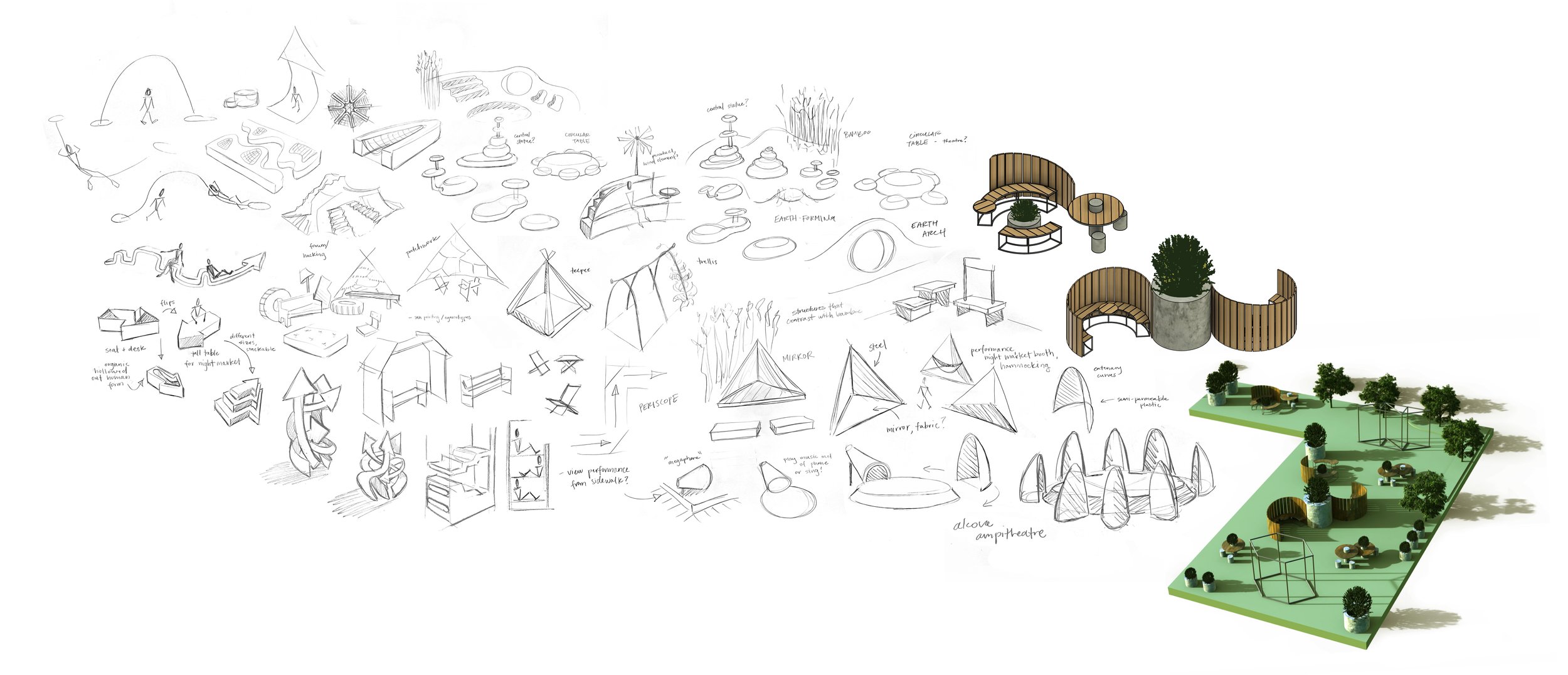
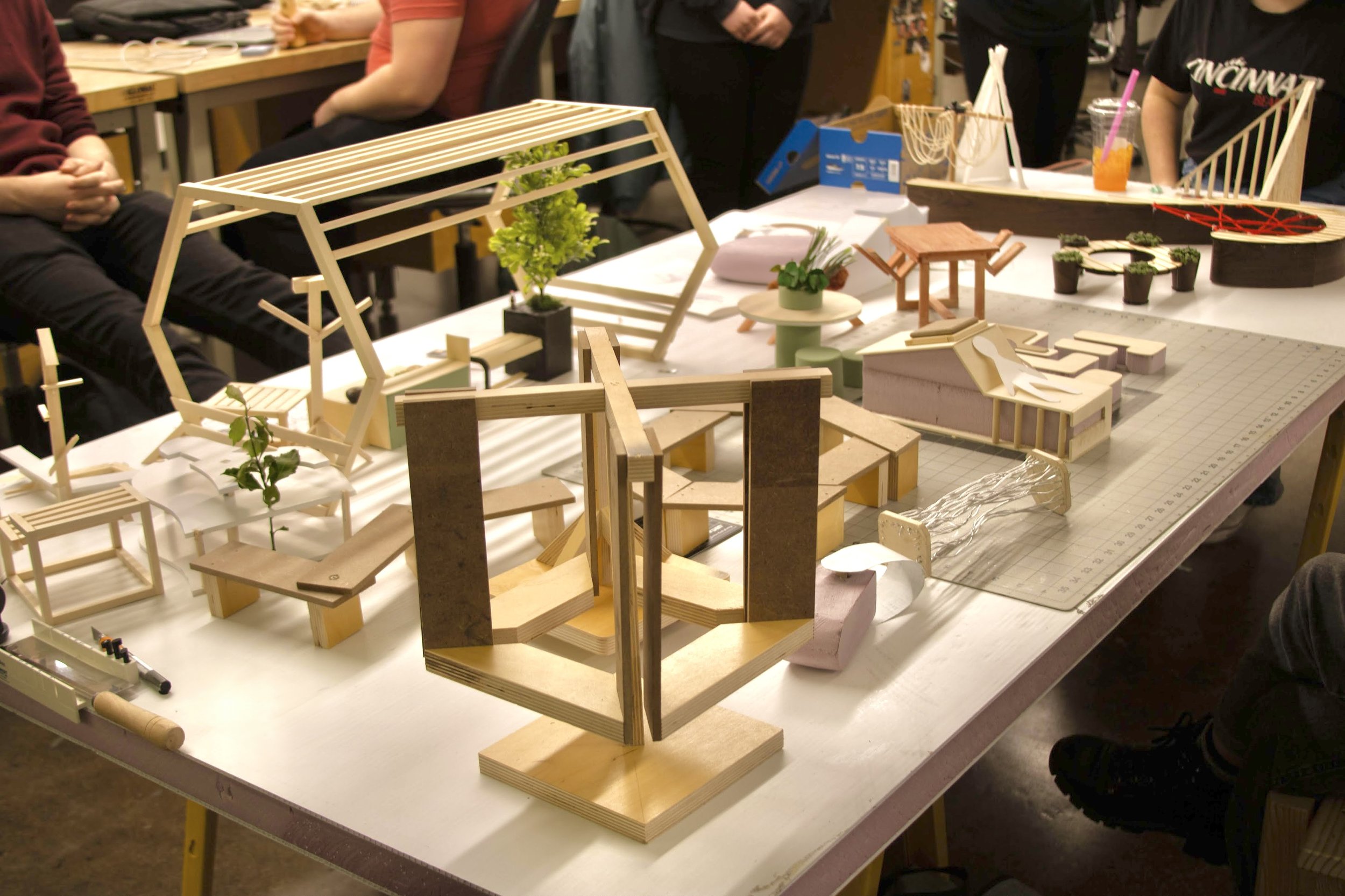
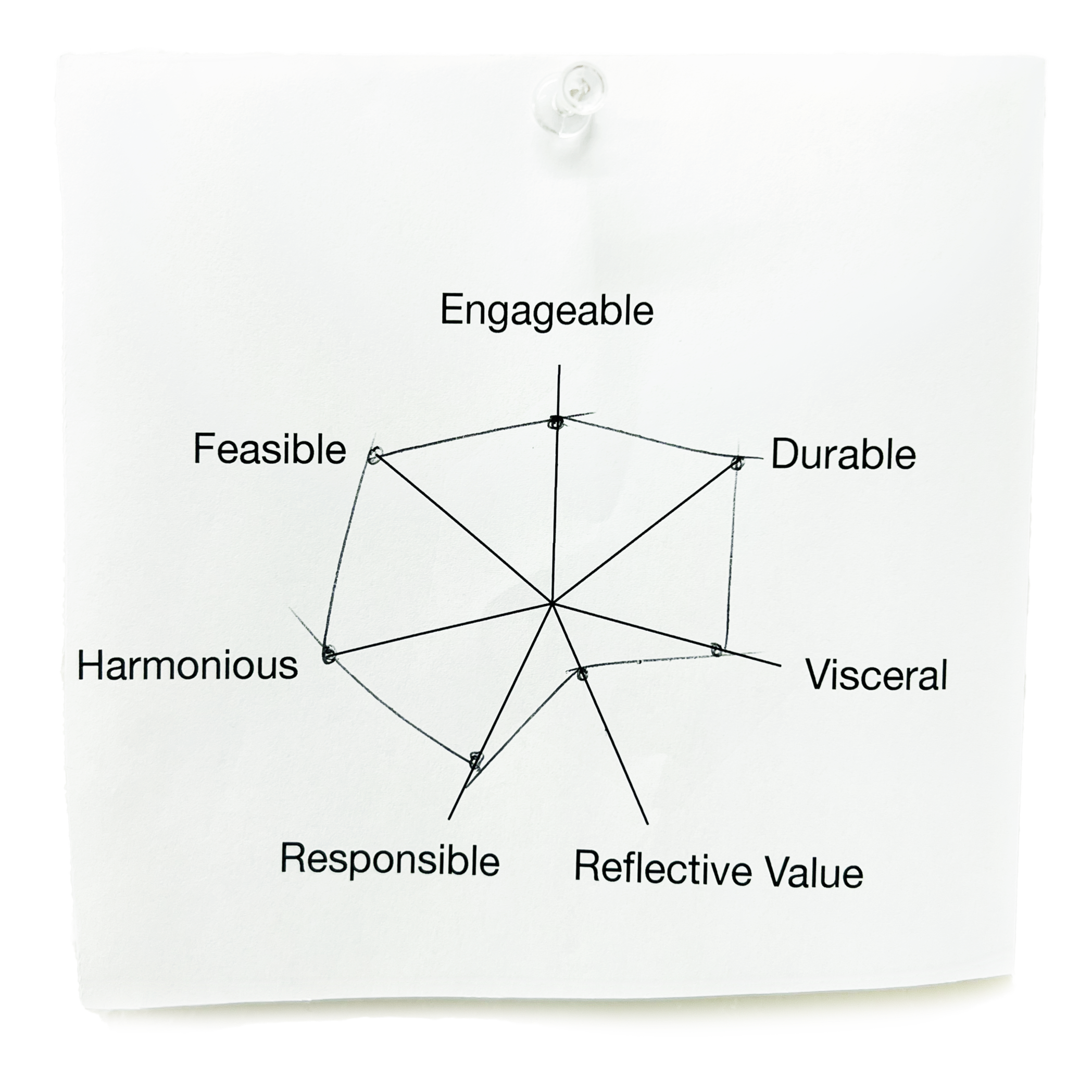
Concepts were refined into a small set of archetypes, evaluated for feasibility, durability, and public use.
The ‘Pringle’ form emerged as the most adaptable and structurally expressive system.
FINAL OUTCOME
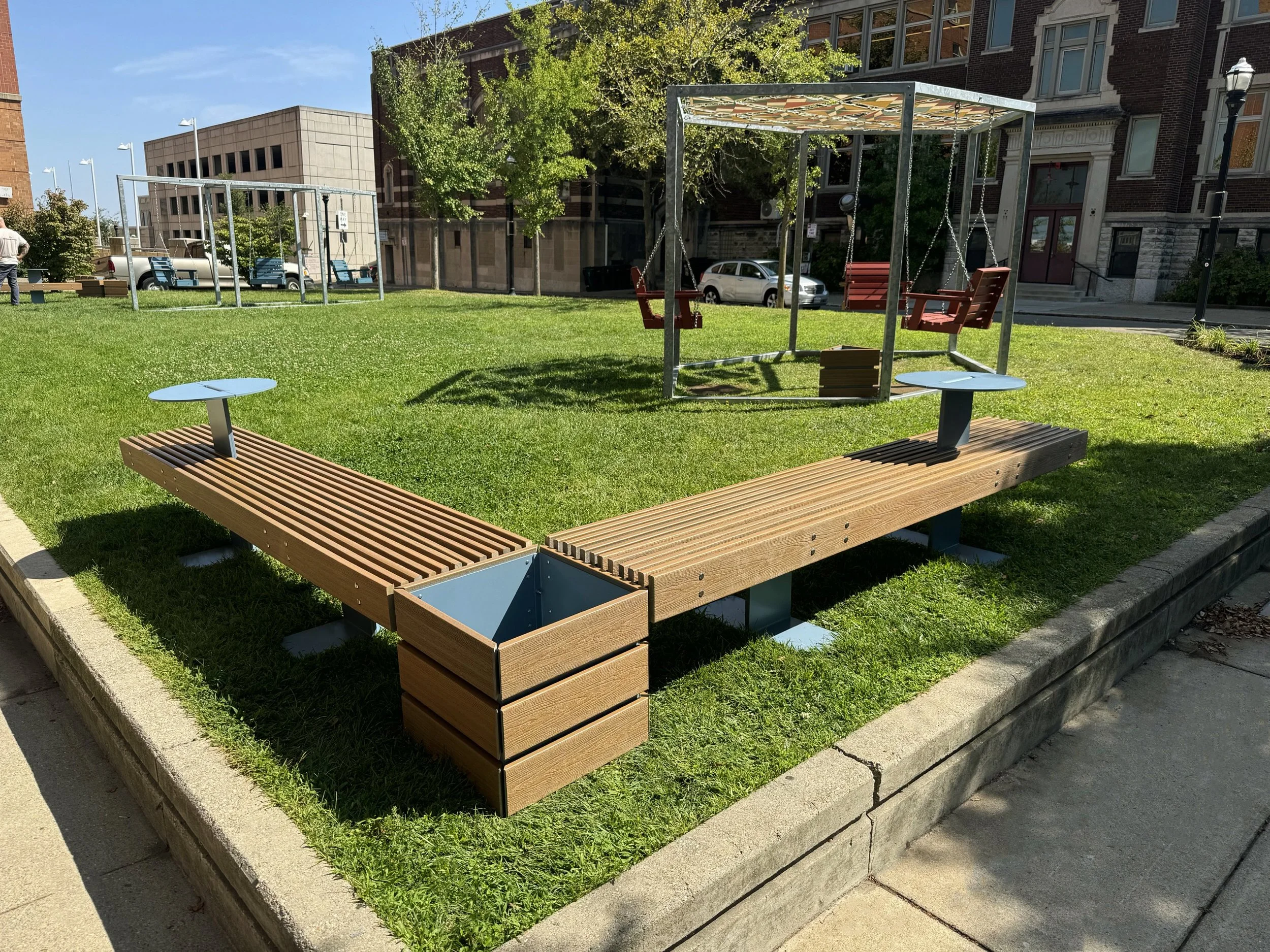
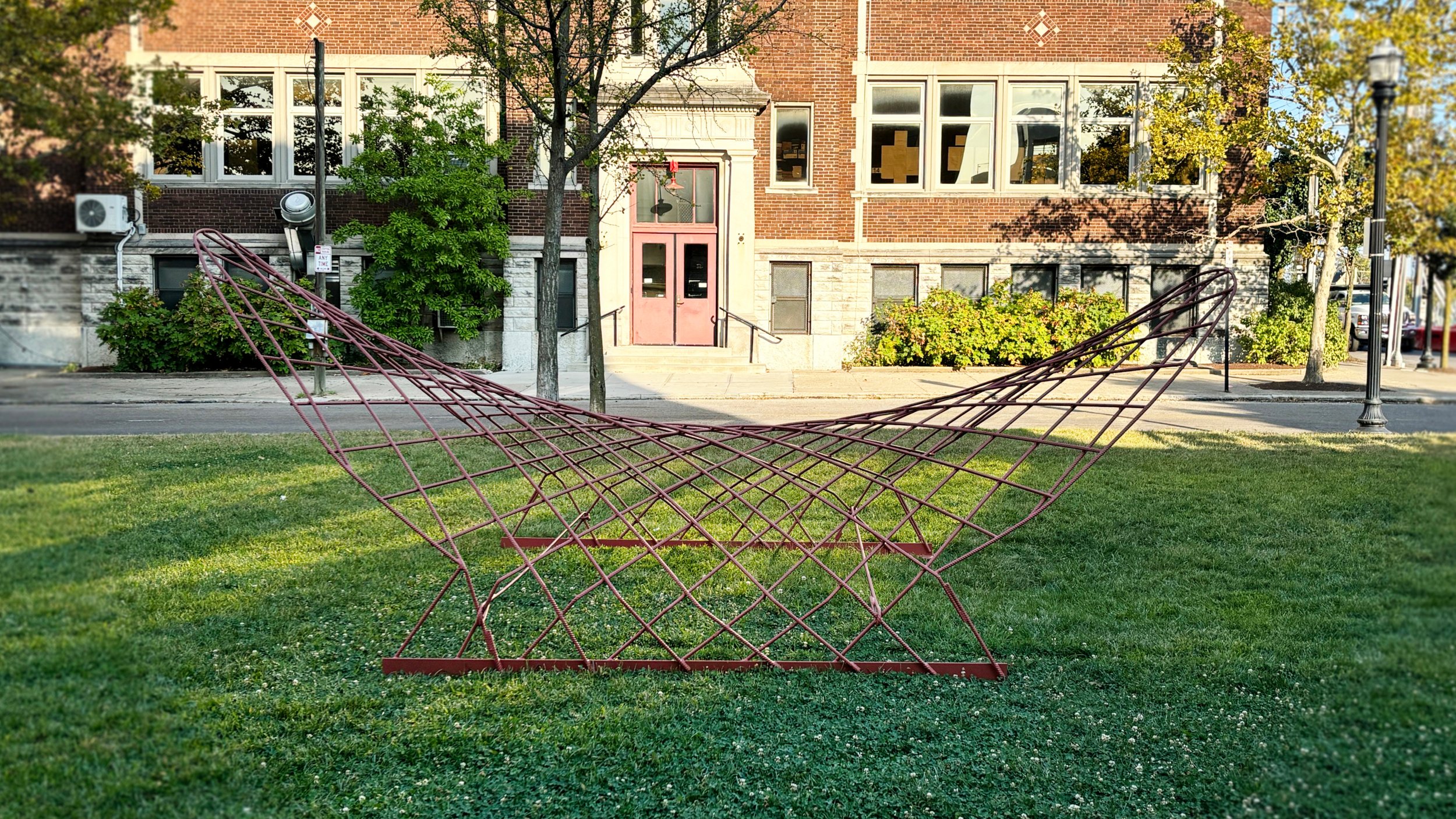
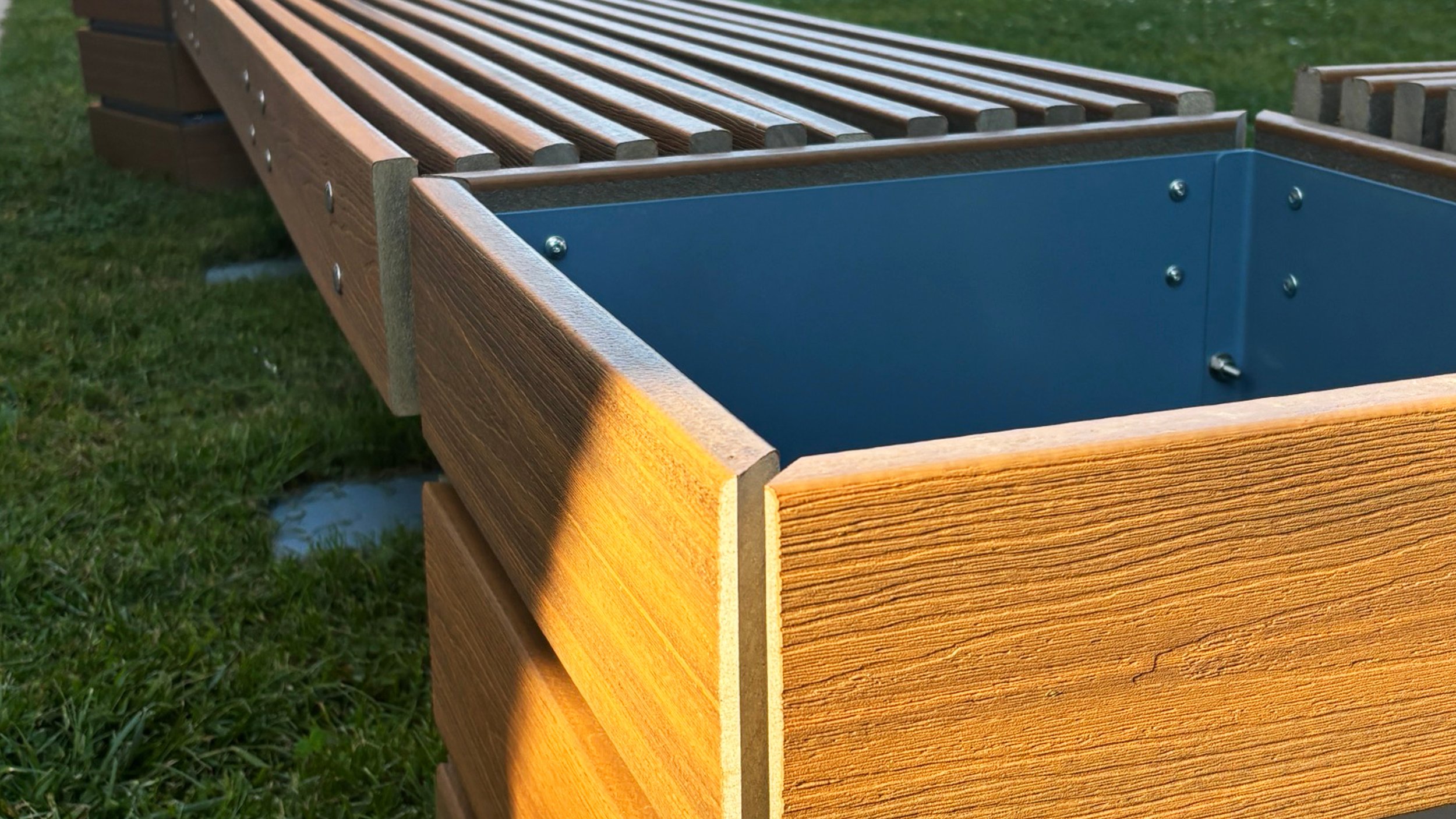
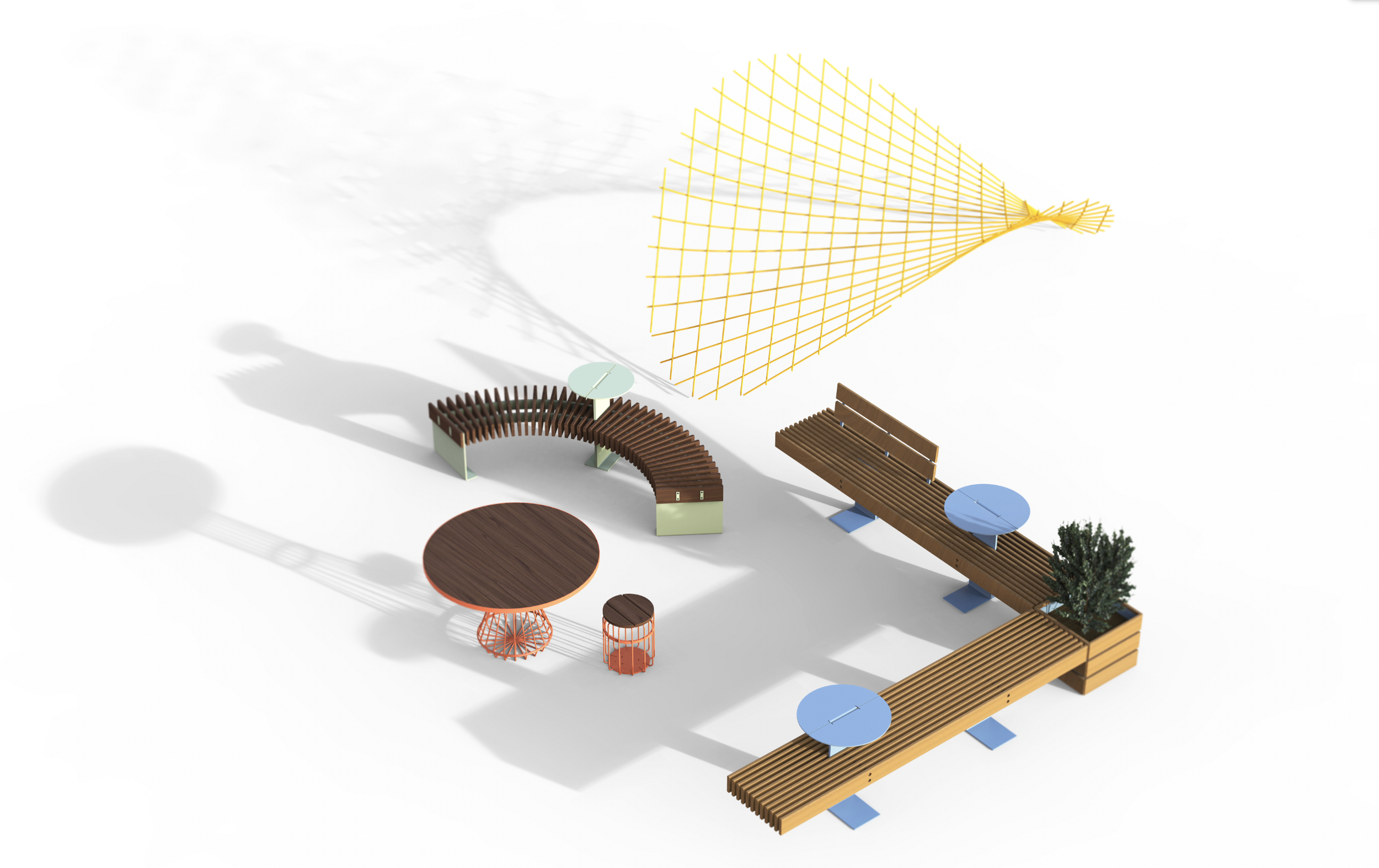
Complete collection —
IF WE HAD MORE TIME…
PROCESS BOOK
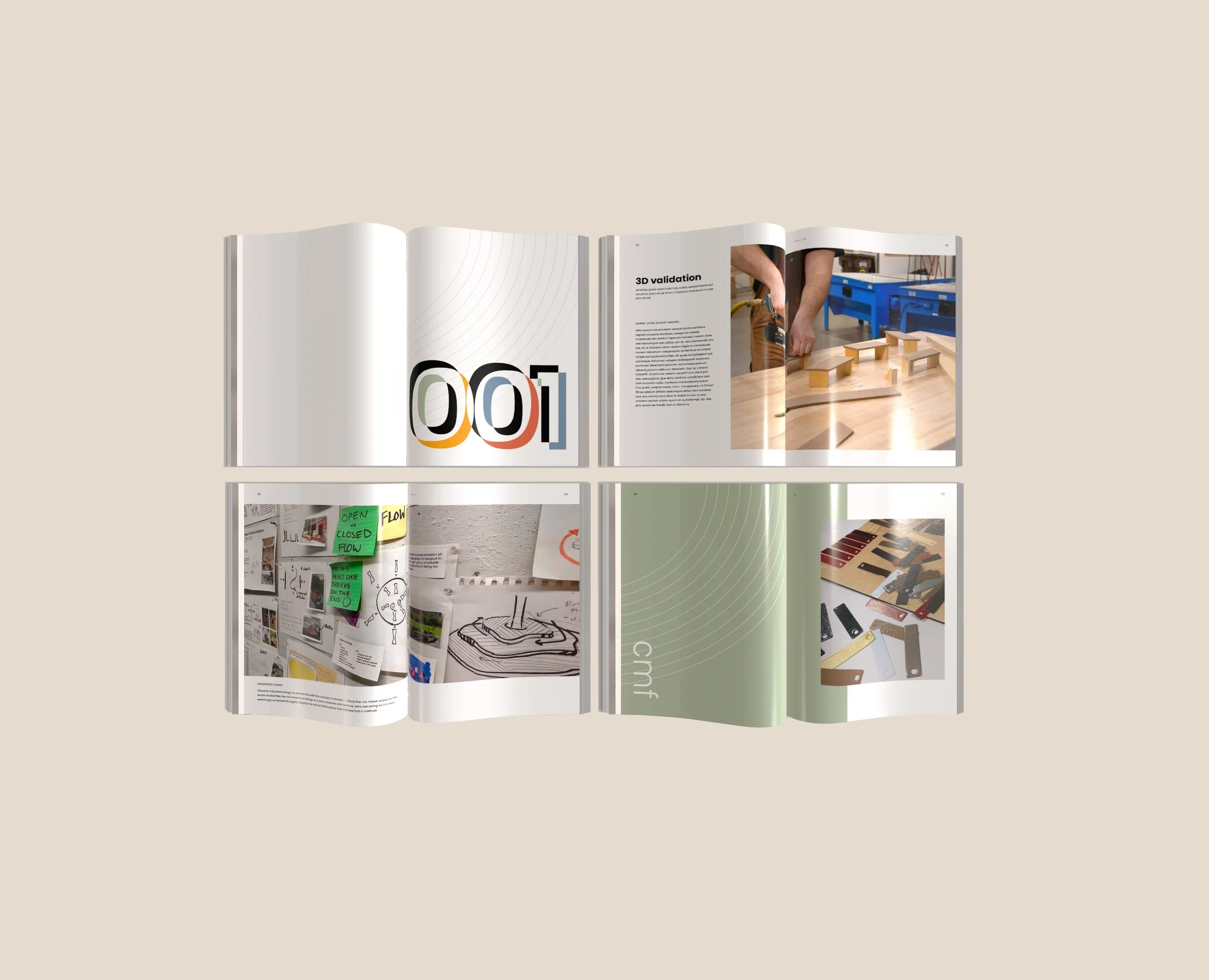
I led the design of the final process book, translating a complex, collaborative workflow into a cohesive visual narrative. The book organizes material research, CMF decisions, and iterative development into a clear system, aligning team contributions and clarifying design intent.
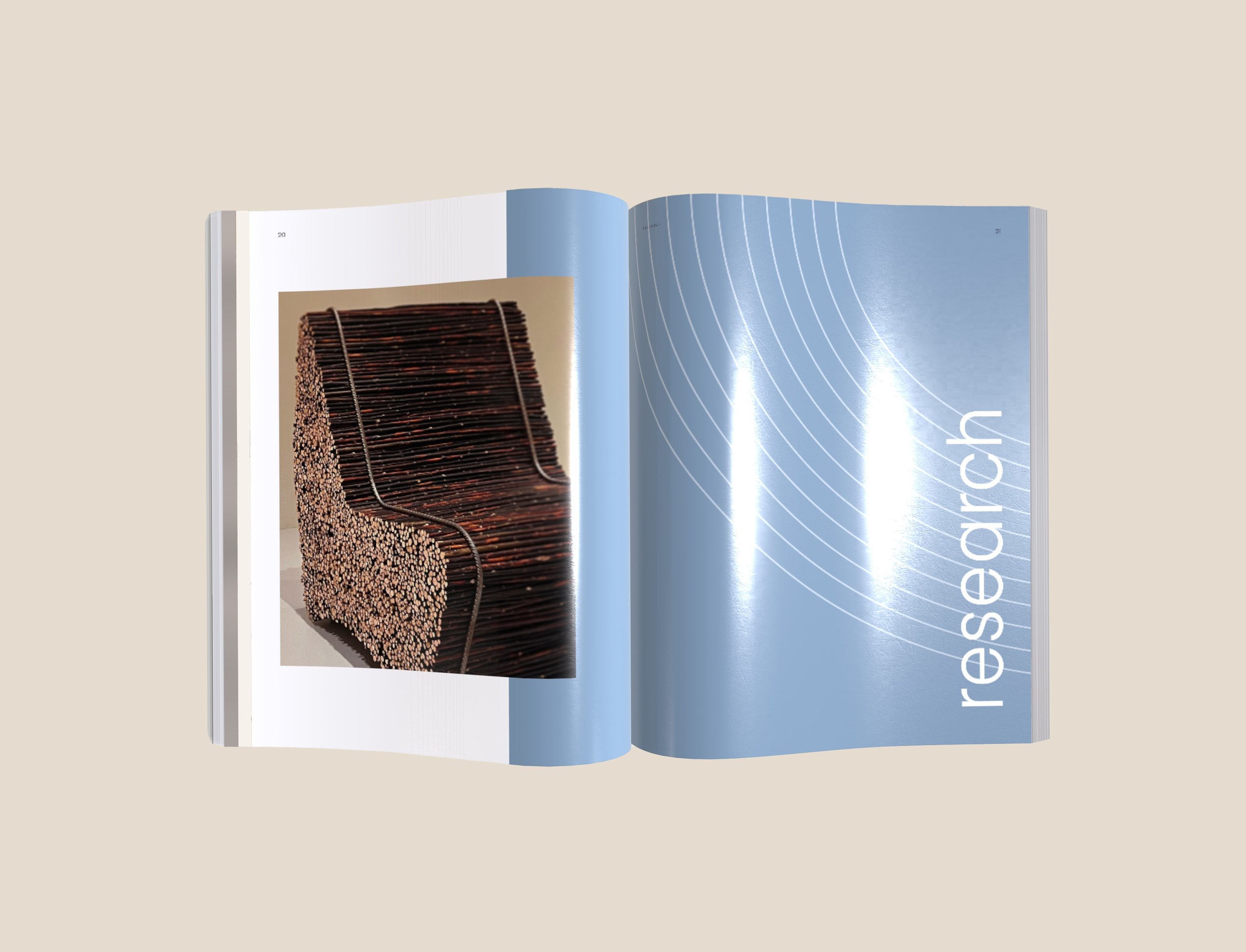
Documentation —
THE DOCUMENTATION BECAME A DESIGN TOOL IN ITSELF, REINFORCING MATERIAL LOGIC AND SYSTEM THINKING ACROSS THE PROJECT.